
On this page
Selling a house in New Jersey usually comes down to two paths: accept a direct cash offer, or list with a real estate agent and wait for a retail buyer. The right choice depends on your property's condition, your timeline, and how you weigh potential sale price against certainty and simplicity.
At a glance
At a glance
Consider a cash buyer if…
- You need to sell on an accelerated timeline
- The property needs major repairs
- You don't want showings, staging, or prep
- You value convenience and closing certainty
- You are managing an inherited or tenant-occupied property
Consider a real estate agent if…
- The home is in strong retail condition
- You have time to prepare and market the property
- You want the highest potential sale price
- You can manage showings and contingencies
- You can continue carrying the property while it's on the market
What Is a Cash Home Buyer?
A cash home buyer is a company or investor that purchases houses directly from owners using their own funds, without a mortgage lender. Because there is no financing contingency, the transaction generally has greater closing certainty — but every sale is still subject to the signed agreement, title review, and any property-specific conditions.
It helps to know the differences between the direct-purchase options you may encounter:
- Cash buyer — buys directly and closes with its own funds.
- Wholesaler — signs a contract and then assigns it to an end buyer. Ask whether the party you're speaking with is the actual buyer or intends to assign the contract.
- iBuyer — a technology-driven purchaser that uses algorithmic pricing. Availability and fees vary by market.
How the process generally works
- Request an offer.
- Provide property information.
- Review the written offer.
- Complete title and contract requirements.
- Close on the agreed date.
Title issues, liens, unpaid taxes, and other contract conditions still matter — read the agreement carefully or have an attorney review it.
What Does a Real Estate Agent Do?

A licensed real estate agent markets your home to retail buyers and handles the transaction from listing to closing. Their work typically includes pricing strategy, MLS marketing, professional photography and listing prep, showings and open houses, offer negotiation, coordination of inspections and appraisals, and closing coordination.
Brokerage compensation is negotiable and set in the listing agreement — it is not a fixed rate. In addition to any agreed listing-broker fee, a seller may also negotiate concessions or credits that affect their net proceeds. Not every real estate agent is a REALTOR®; that designation applies only to agents who are members of the National Association of REALTORS®.
Cash Buyer vs. Real Estate Agent: Side-by-Side
| Factor | Cash Buyer | Real Estate Agent |
|---|---|---|
| Potential sale price | Typically below top retail price | Higher potential price on a prepared, well-marketed home |
| Typical preparation | Little to none | Cleaning, repairs, staging, photography |
| Repairs | Usually purchased as-is | Seller may list as-is, but buyers often request repairs, credits, or price reductions |
| Showings | None | Multiple showings and possible open houses |
| Timeline | Shorter — no mortgage underwriting | Longer — marketing period plus financed-closing timeline |
| Brokerage compensation | None to the seller in a direct sale | Negotiable listing-broker fee; possible concessions |
| Financing contingency | None (cash) | Yes — subject to buyer's loan approval |
| Inspection / due diligence | Depends on the agreement; some buyers waive, some don't | Typically included; can lead to negotiation |
| Appraisal | Generally not required by the buyer | Usually required by the buyer's lender |
| Closing-date flexibility | Often flexible | Driven by the buyer's lender and contract |
| Transaction complexity | Fewer contingencies | More parties, more contingencies |
| Best suited for | Homes needing work, urgent timelines, complex situations | Move-in-ready homes with time to market |
Gross Price vs. Net Proceeds
The highest offer isn't always the highest amount that reaches your bank account. The clearest way to compare the two paths is to look at estimated net proceeds — what's left after selling costs, carrying costs, and any credits or concessions.
Illustrative example
Hypothetical figures on a $400,000 potential retail sale. Actual offers, costs, taxes, and proceeds vary by property and transaction.
Retail listing path
- Potential sale price$400,000
- Negotiated brokerage compensation– varies
- Repairs / buyer credits– varies
- Cleaning, landscaping, staging, photography– varies
- Mortgage, insurance, taxes, utilities during marketing– varies
- Attorney, title, transfer costs, prorations– varies
Net proceeds depend on how many of these apply and how the sale is negotiated.
Direct cash-sale path
- Cash offerLower than top retail
- Repairs / prepUsually none
- Showings and stagingNone
- Marketing carrying costsReduced
- Mortgage payoffs, liens, delinquent taxes, closing charges– varies
The trade-off: a lower headline price for fewer contingencies and less preparation.
This example is for illustration only. It does not represent a promise, guarantee, or specific outcome. Sellers should request a written estimate of net proceeds from each option before deciding.
See a real number before you decide
Get a no-obligation cash offer to compare against an agent's estimated net proceeds.
When a Cash Buyer May Make Sense
Foreclosure deadline
A cash sale can be structured around an auction or sale date, reducing the risk of running out of time.
Inherited property
Heirs often want to divide proceeds without cleaning out, updating, or coordinating repairs across family members.
Major repairs needed
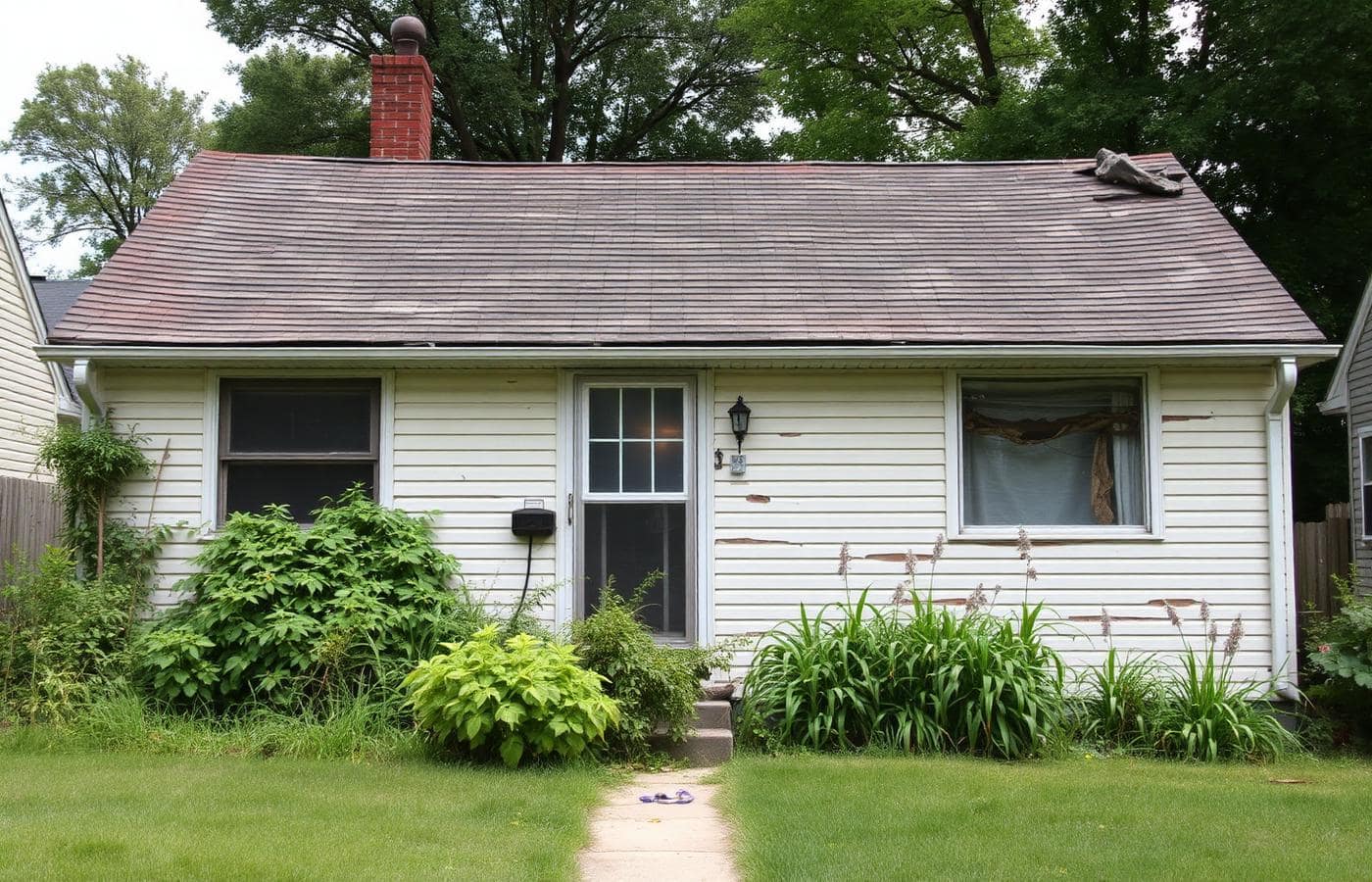
When a property needs significant work, a direct sale avoids paying for repairs before selling.
Fire or water damage
Damaged properties can be difficult to list retail; a cash buyer will typically evaluate the home in its current condition.
Problem tenants
A direct sale can move forward without staging showings around difficult tenants.
Relocation
When a job move creates a hard deadline, closing certainty often matters more than the highest possible price.
Divorce
A predictable timeline and simple process can help both parties move forward.
Tax liens or code violations
Certain title issues and municipal violations can complicate a traditional listing.
Vacant property
Carrying costs — taxes, insurance, utilities — add up quickly on an empty home.
Unwanted rental property
Selling directly can be simpler than repositioning a rental for the retail market.
When Listing With an Agent May Make Sense
Listing is often the stronger path when the fundamentals favor a retail sale:
- The property is in move-in-ready condition.
- The neighborhood has strong retail demand and healthy recent comps.
- You don't have a strict deadline and can absorb a marketing period.
- You're willing to prepare the home and allow inspections and showings.
- Maximizing sale price is your top priority.
Five-question decision guide
- How quickly do you need to sell? A hard deadline shifts weight toward a direct cash sale.
- What repairs does the property need? Significant deferred maintenance can narrow your pool of retail buyers.
- Can you continue paying carrying costs — mortgage, taxes, insurance, utilities — while the home is marketed?
- Are you comfortable preparing the home, allowing showings, and negotiating inspection responses?
- Do you prioritize the highest potential price, or a simpler and more predictable process?
There's no single-question rule. Look at the overall pattern of your answers. When speed, condition, or certainty dominate, a cash sale often fits better. When time, condition, and price ceiling all point retail, a listing usually wins.
Questions to ask a cash home buyer
Not every cash buyer works the same way. Before signing, ask:
- Are you the actual buyer, or do you plan to assign the contract?
- Can you provide proof of funds?
- Are there inspection or cancellation contingencies in the agreement?
- Can the offer price change after the walkthrough — and under what conditions?
- Who pays each closing-related expense?
- Will I receive a written estimate of expected net proceeds?
- Who will handle closing and title work?
- Are there any service fees, admin fees, or upfront payments?
- What happens if title problems, liens, or unpaid taxes are discovered?
- Can I have a real estate attorney review the agreement before signing?
Common misconceptions
“Every cash offer is a lowball offer.”
Cash offers are generally below top retail, but they reflect condition, repair costs, resale risk, and carrying costs — not a fixed discount.
“Listing with an agent always produces more net proceeds.”
Sometimes it does, sometimes it doesn't. A careful net-proceeds comparison is the only reliable answer.
“A cash offer cannot fall through.”
Cash sales have fewer contingencies, but they can still be delayed or canceled based on title issues, inspection findings, or agreement terms.
“Selling as-is means I must use a cash buyer.”
A homeowner can list a property as-is with a real estate agent. Retail buyers may still request repairs, credits, or price reductions.
“Cash buyers never conduct inspections.”
Some do a walkthrough or inspection; some don't. Check the specific agreement.
“I don't need to read the agreement because it's a cash transaction.”
Always read the agreement — or have an attorney review it — regardless of who the buyer is.
Frequently Asked Questions
The Final Verdict
A real estate agent is often the right fit for a prepared home when the seller has time to market and wants the highest potential price. A cash buyer is often the right fit when the property needs work, when the timeline is tight, or when simplicity and closing certainty matter more than the top of the market.
The best comparison isn't headline price against headline price — it's estimated net proceeds, timeline, conditions, and certainty against each other. Ask for both numbers in writing, then choose the path that fits your property and your situation.